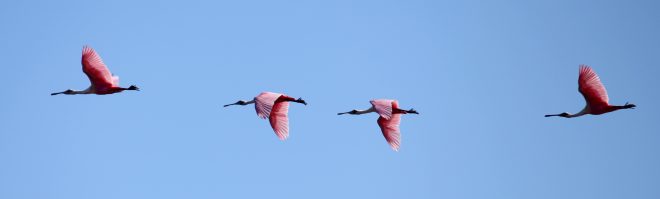
We have both Yellow-crowned Night Herons, and Black-crowned Night Herons in our wetlands. These first two photos below show an adult Yellow-crowned Night Heron (l.) and a Black-crowned Night Heron (r.).


These Night Herons look quite distinctly different from one another as adults, as can be seen. The juveniles below, however, look much more similar to one another. When you see a juvenile, it is sometimes hard to be 100% sure which is which.

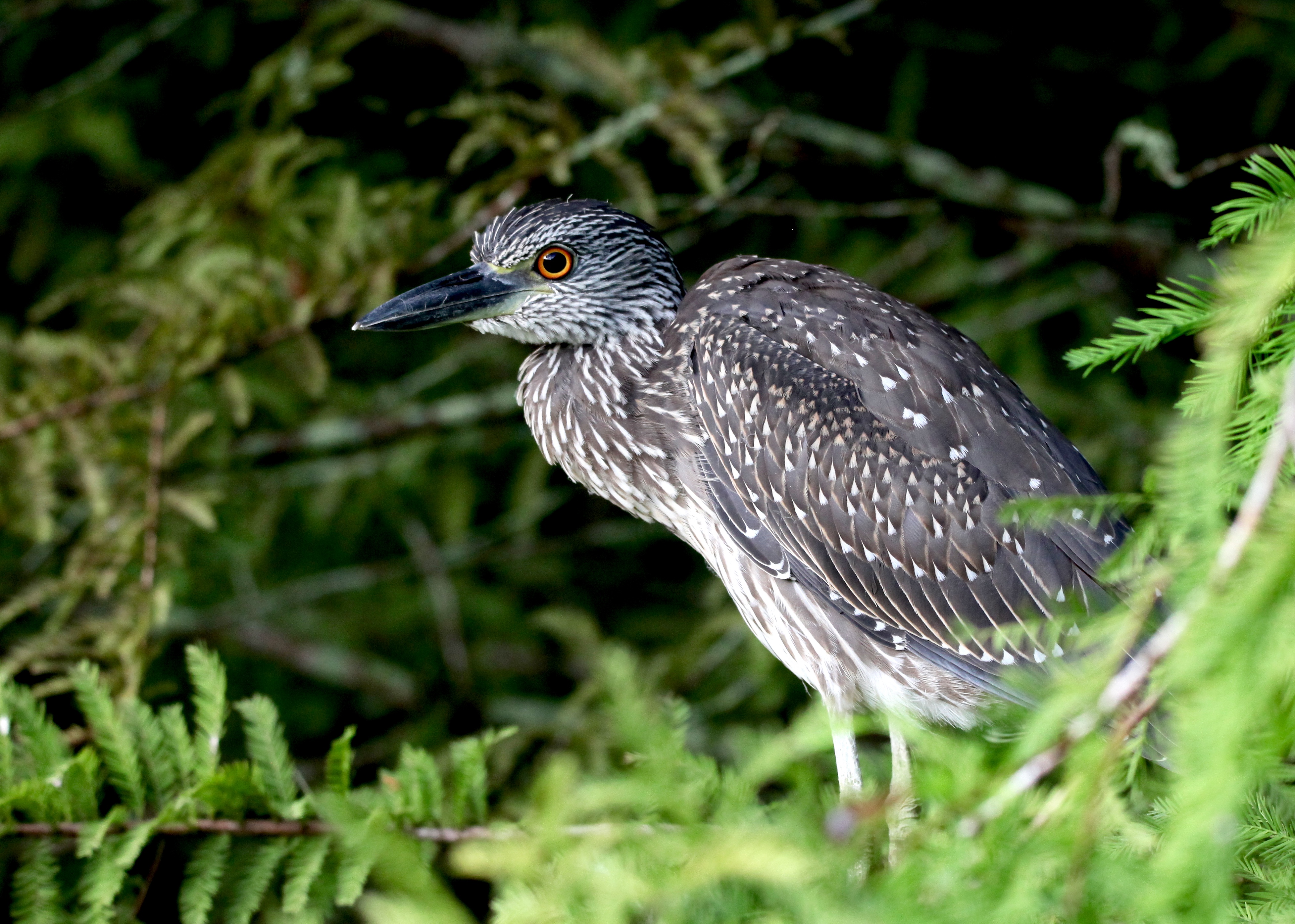
Do you think the two juveniles are the same species as one another, or two different species? Do you think they are Yellow-crowned or Black-crowned? The following sites have helpful comparisons: All About Birds; Audubon; Birdzilla; OntheWing
 Birder's Journey
An absolutely crowning post.
LikeLiked by 1 person
Lol 👑 Thanks, Berny!
LikeLike
😁, side by side not that hard. But you know out in the marshes, in a hurry thats a much tougher question. Nice shots and article 👍
LikeLiked by 1 person
Agreed, seems so easy to ID when you can look at both together.
LikeLiked by 1 person
That is so true BJ for many juvenile birds, as they have their mottled brown and white protective plumage often similar to the female to protect them while nesting. I find it difficult with juveniles of waterbirds also.
LikeLiked by 1 person
Such a good point, AB. Your comment makes me think of all the red winged blackbird nestlings we’ve seen this spring.
LikeLiked by 1 person
Wow, what amazing photos!!
LikeLiked by 1 person
They’re such cool birds!☺️
LikeLiked by 1 person
How neat! I’ve never seen the Yellow-crowned ones.
LikeLiked by 1 person
Interesting, Deborah. I think we see more of them this year than the Black-crowned.
LikeLiked by 1 person
How wonderful to get to see both species close to one another and be able to compare them directly.
LikeLiked by 1 person
Thanks for your visit, Tanja!
LikeLiked by 1 person
Always a pleasure.
LikeLiked by 1 person
I have a very difficult time even finding them.
Especially when there is no moon. I mean, it’s really dark in the marsh. You must have a really powerful flash to get such nice photographs! But I’m especially impressed you located both species in the middle of the night!
What?
Night Herons can be seen in the daytime??
Never mind.
(Terrific post! The immature birds can be quite challenging to i.d. Sorry to hijack the post with attempted humor. I blame not enough coffee.)
LikeLiked by 1 person
HaHa… Good one! But I couldn’t be fooled – I know you’re a fellow Floridian. Not enough ☕️ is always a good excuse, Wally.
LikeLike
Beautiful photographs! The ‘Night heron’ name has a mysterious suggestion to it.
LikeLiked by 1 person
I never thought of it, that way, Ann, but I think you’re absolutely right. Very interesting!
LikeLiked by 1 person