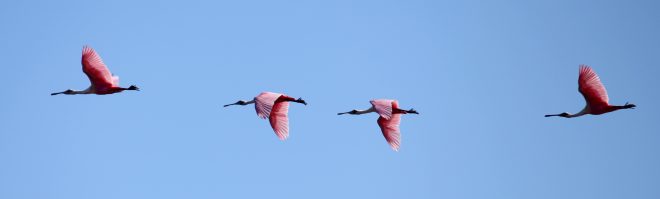
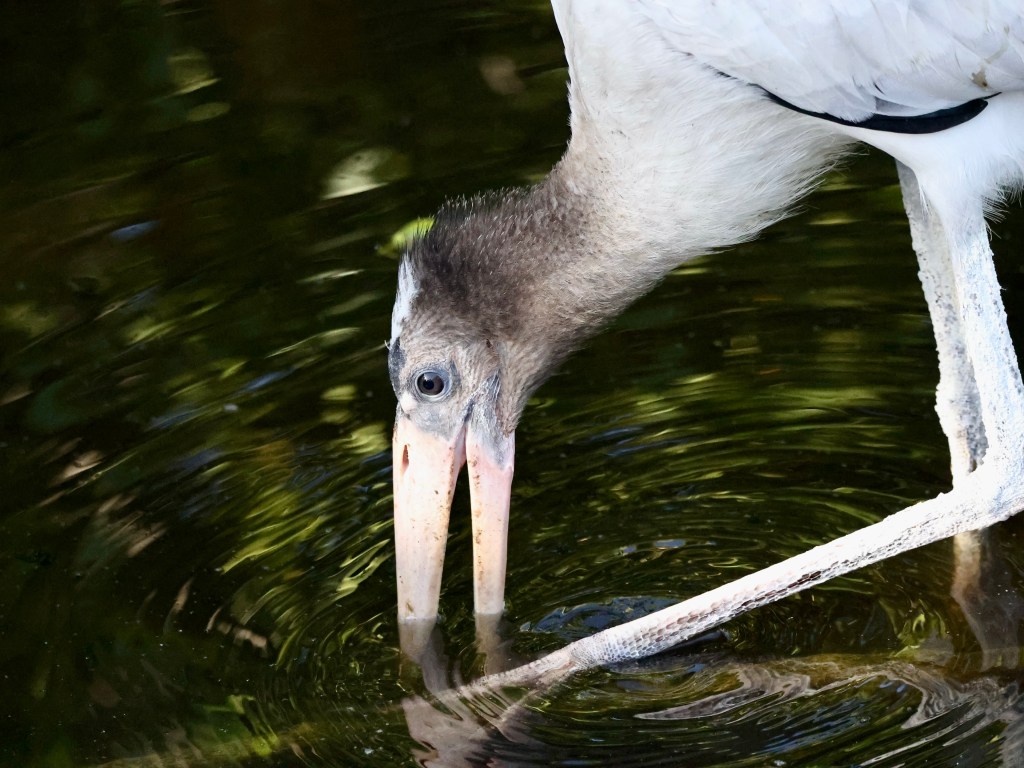
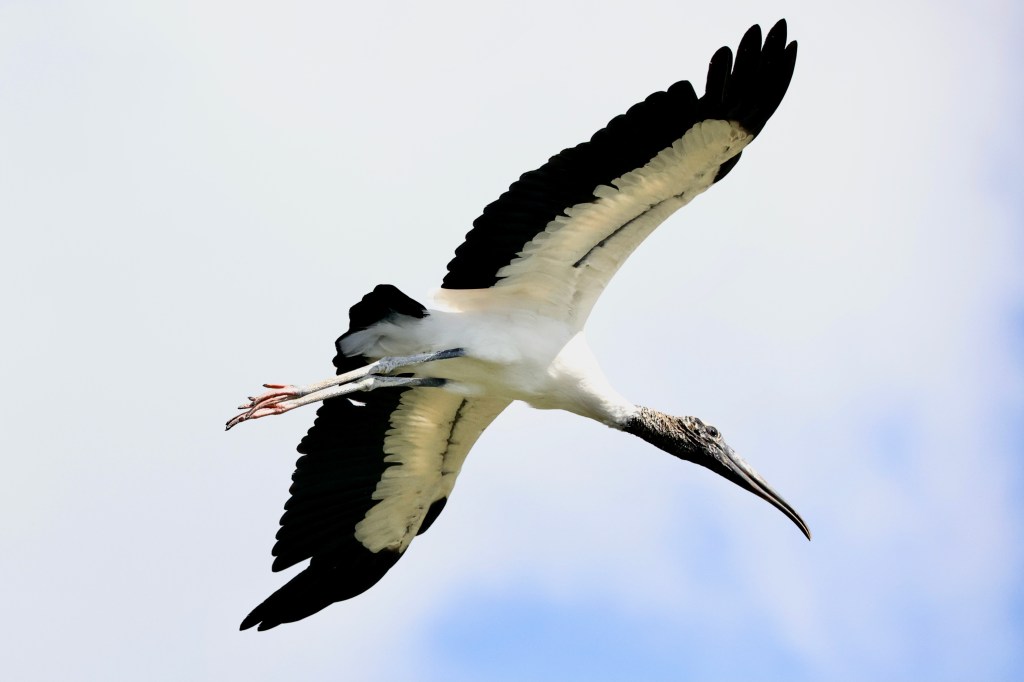
Despite their prevalence here in our local wetlands, I haven’t posted in a very long time about Wood Storks. The Wood Stork is a “bald-headed wading bird [that] stands just over 3 feet tall, towering above almost all other wetland birds.” (All About Birds). The adult’s head is bald and scaly in appearance, and its bill is dark and heavy, while the juveniles have soft fuzzy ‘brushcuts’, and pinkish bills.
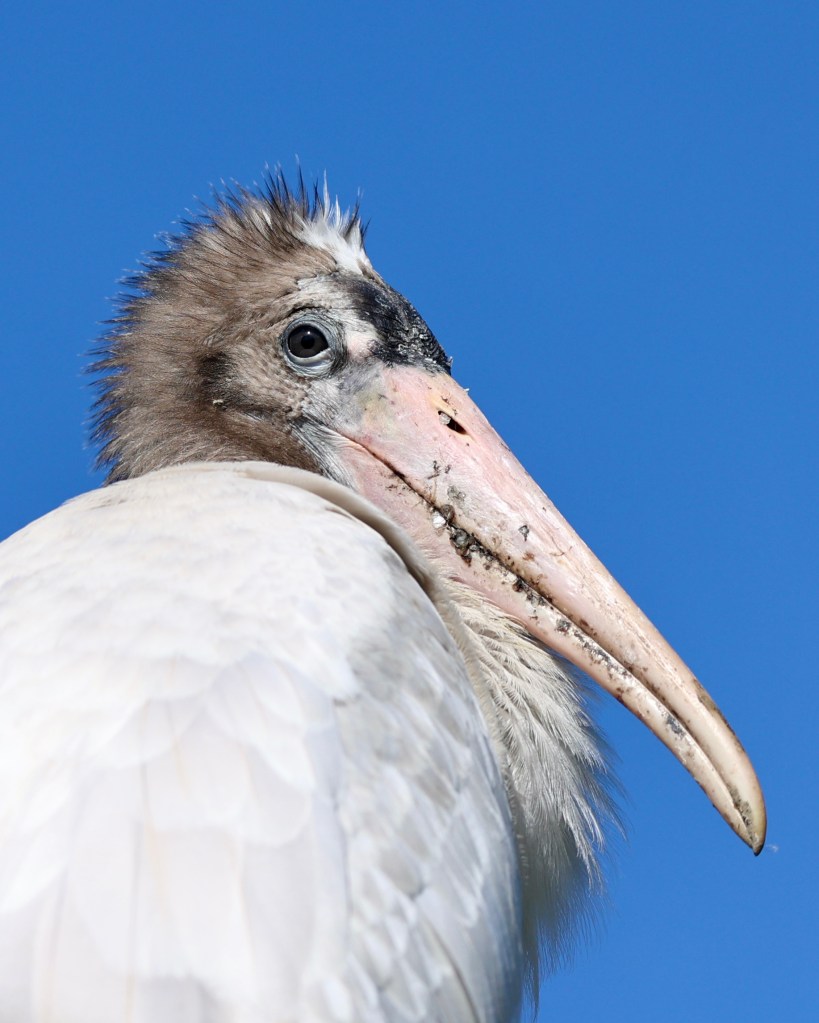
Over the past decade they have really ‘taken over’ the tree islands, greatly outnumbering our nesting herons, egrets, and other wading birds every year. They arrive in early winter, mate and raise their young throughout our busy spring breeding season. The two photos of juvenile Wood Storks above were taken in early July and they still have not fledged yet in early August!
 Birder's Journey
It’s such good news to see continuing successes of our Wood Storks.
With those “bald and scaly” heads, I seem to have a strange empathy for the young’uns.
LikeLiked by 1 person
I feel the same way about them, Wally. It really is amazing to see this success story here at Wakotahatchee Wetlands in Palm Beach county.
LikeLike
In wetlands lush, where waters gleam, 🌿 The Wood Storks linger like a dream. 🦩 With their towering, stately grace, 🌟 They fill our skies and marshy space.
Juveniles with fuzzy heads, 🌟 Brushcut feathers, pinkish treads. 🍼 Not yet grown, still learning how, 🌳 To take the skies, they’ll learn it now.
Their adult kin, so bald and bare, 🦩 With scaly heads and darkened stare, 🌌 Overshadow birds that stand, 🌾 In their towering, wetland land.
For years they’ve made the treetop home, 🏡 From winter’s chill till spring’s full bloom. 🌸 Nestling in their leafy keep, 🌳 Their young ones stay while others leap.
In July’s sun and August’s glow, 🌞 The juvenile storks still grow. 🌱 A sight to see, a tale to tell, 📜 Of Wood Storks’ lives where wetlands dwell.
From fuzzy fluff to elegant flight, 🦩 They grace our wetlands day and night. 🌙 In nature’s grand and scenic play, 🎭 These storks make magic in their way. 🦩🌿🌞
LikeLiked by 1 person
I love this, Yishai! A beautiful tribute to these wonderful birds💕
LikeLike
I wonder why they haven’t fledged yet? Interesting post and wonderful photos!
LikeLiked by 1 person
These were apparently the last eggs laid and last ones to hatch out of the MANY Wood Stork babies this season. Made for an even longer season than usual.
LikeLiked by 1 person
Wonderful images!!
LikeLiked by 1 person
Thank you
LikeLike
Such amazing birds- terrific images, BJ!
LikeLiked by 1 person
Thanks so much, Jane! They really are remarkable birds, and their comeback from the endangered list is amazing.
LikeLiked by 1 person
Thanks for sharing about your Wood Stalks, I love learning about your birds BJ.
LikeLiked by 1 person
Just as I always enjoy learning about the many diverse birds that you share, AB. It’s also always fascinating to learn about the differences between species that are similar but not quite the same.
LikeLiked by 1 person
Wonderful captures, Carol, and fun to have a long season with them. Hopefully they will have a good survival rate–it is amazing that the adults can bring enough food for these large chicks to thrive.
LikeLiked by 1 person
I see that you and Ted have also been watching the Woodstorks lately in your area ☺️
LikeLiked by 1 person
We have, and very happy that at least one rookery in SC had more than double the number of successful nests as last year. I think there must be other rookeries in more secluded areas around the marshes as we are seeing juveniles in a few other places feeding when the water is low.
LikeLiked by 1 person
Terrific!
LikeLiked by 1 person
So cute. Thanks.
LikeLiked by 1 person
They’re often teased for their looks, but I agree with you, Roberta. I also think they’re cute!
LikeLike
Striking birds and beautiful photos. Nice to read that as a species they are less endangered than previously.
LikeLiked by 1 person
Thank you, Carol. Yes, the Wood Storks have made a remarkable comeback.
LikeLike
Any idea why / how the storks have taken over?
LikeLiked by 1 person
Oh my goodness! I had a very busy September with lots of family visiting and have just realized I never responded to your comment. I think the Woodstorks have discovered that the wetlands here in Palm Beach County are just perfect for their breeding and nesting needs. I actually looked up this very question and got a helpful and interesting AI response which is probably very accurate: https://www.google.com/search?q=why+have+Woodstorks+taken+over+at+Wakodahatchee+in+recent+years%3F&ie=UTF-8&oe=UTF-8&hl=en-us&client=safari
LikeLiked by 1 person
That face! So gorgeous!
LikeLiked by 1 person
Yes!!
LikeLike