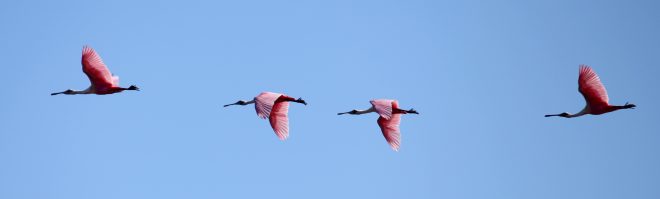
One of our most striking Florida birds is the Roseate Spoonbill.
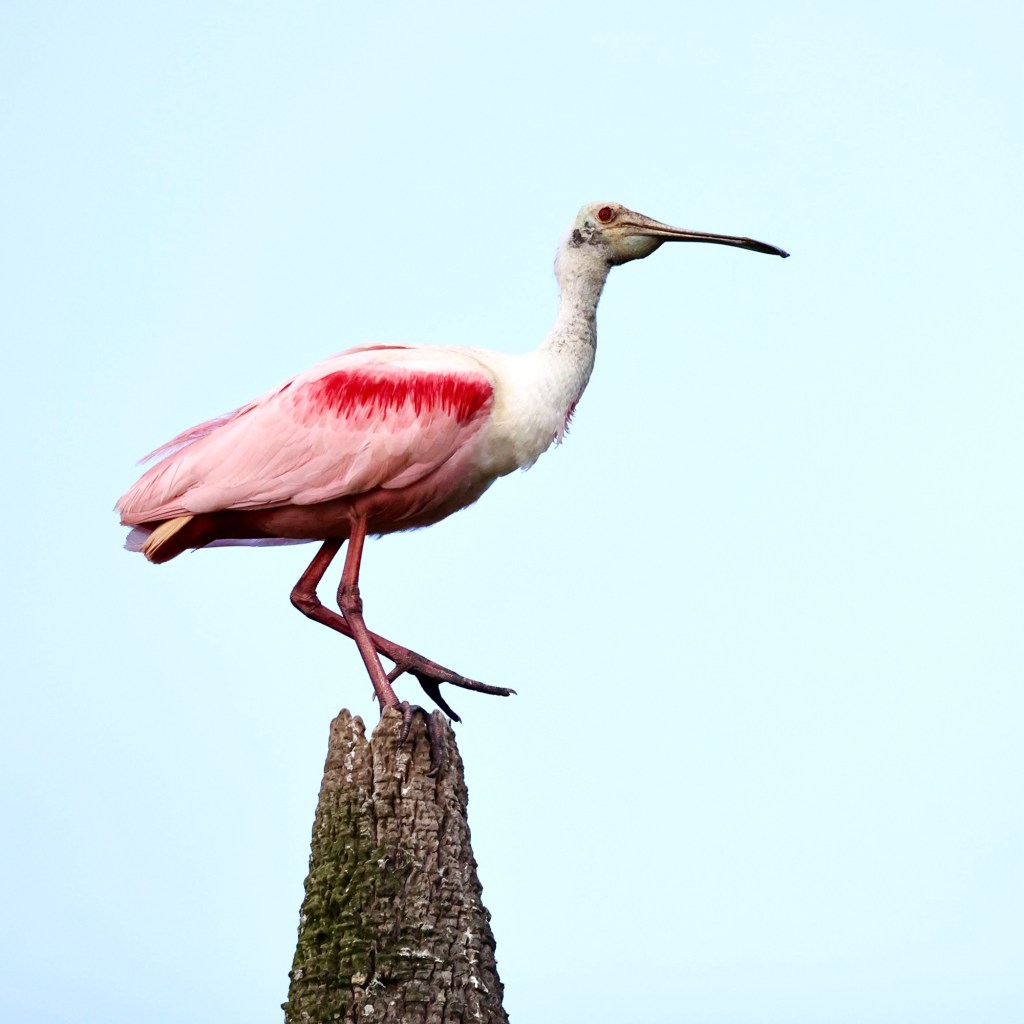
Adult Roseate Spoonbills, especially in breeding colors, look stunning in any pose.
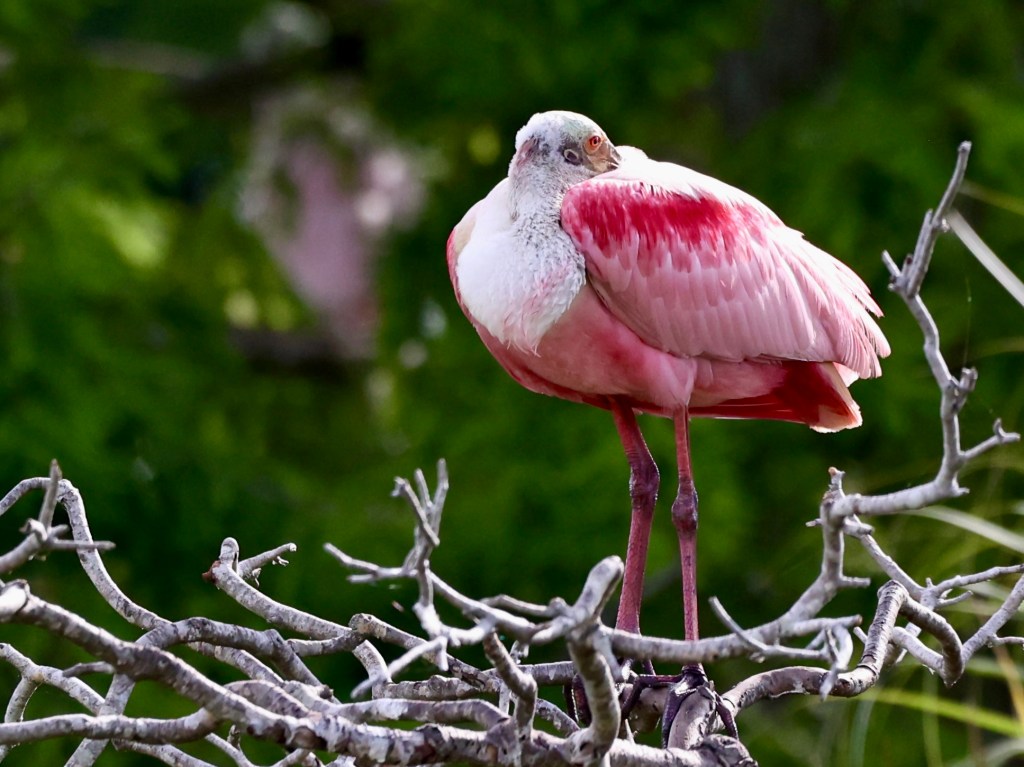
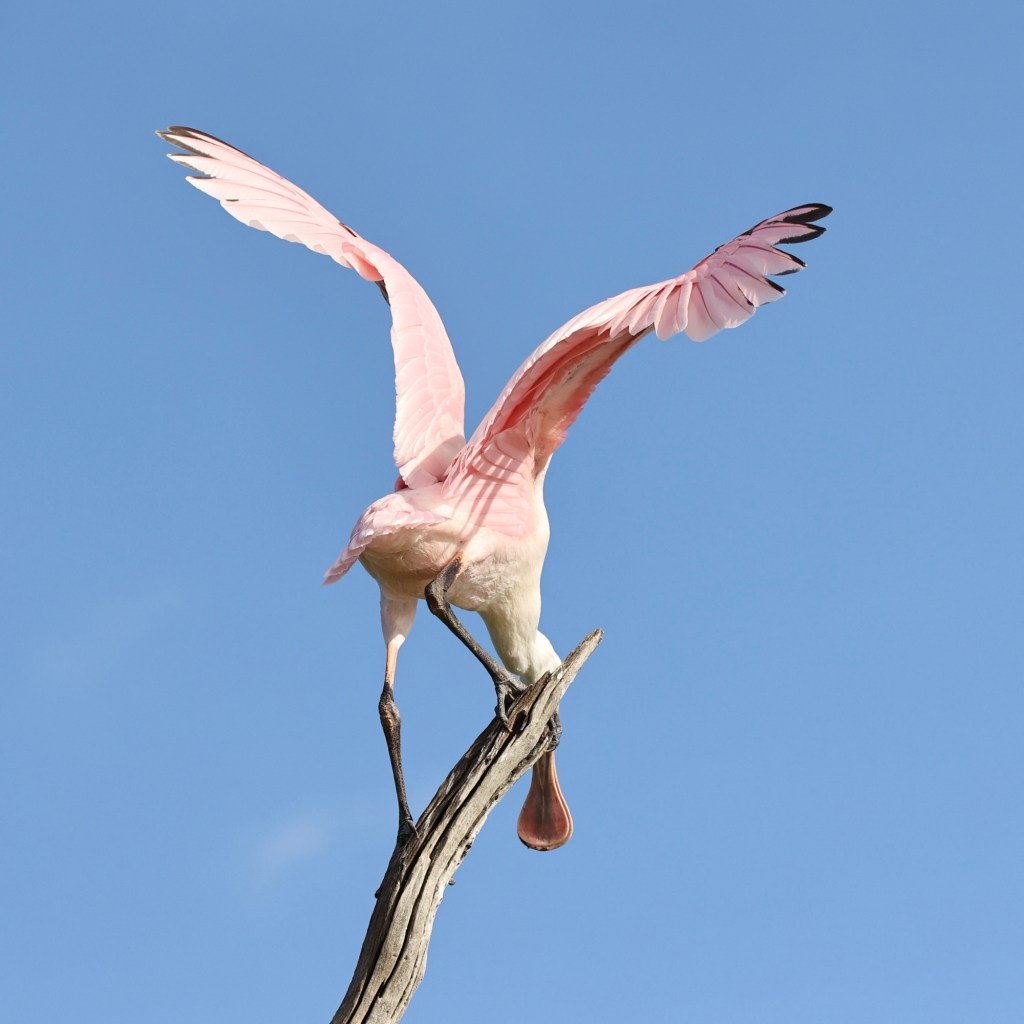
Their new, paler-pink fledglings have learned to open those great wings and take short flights, but they’re still a bit unsteady here!
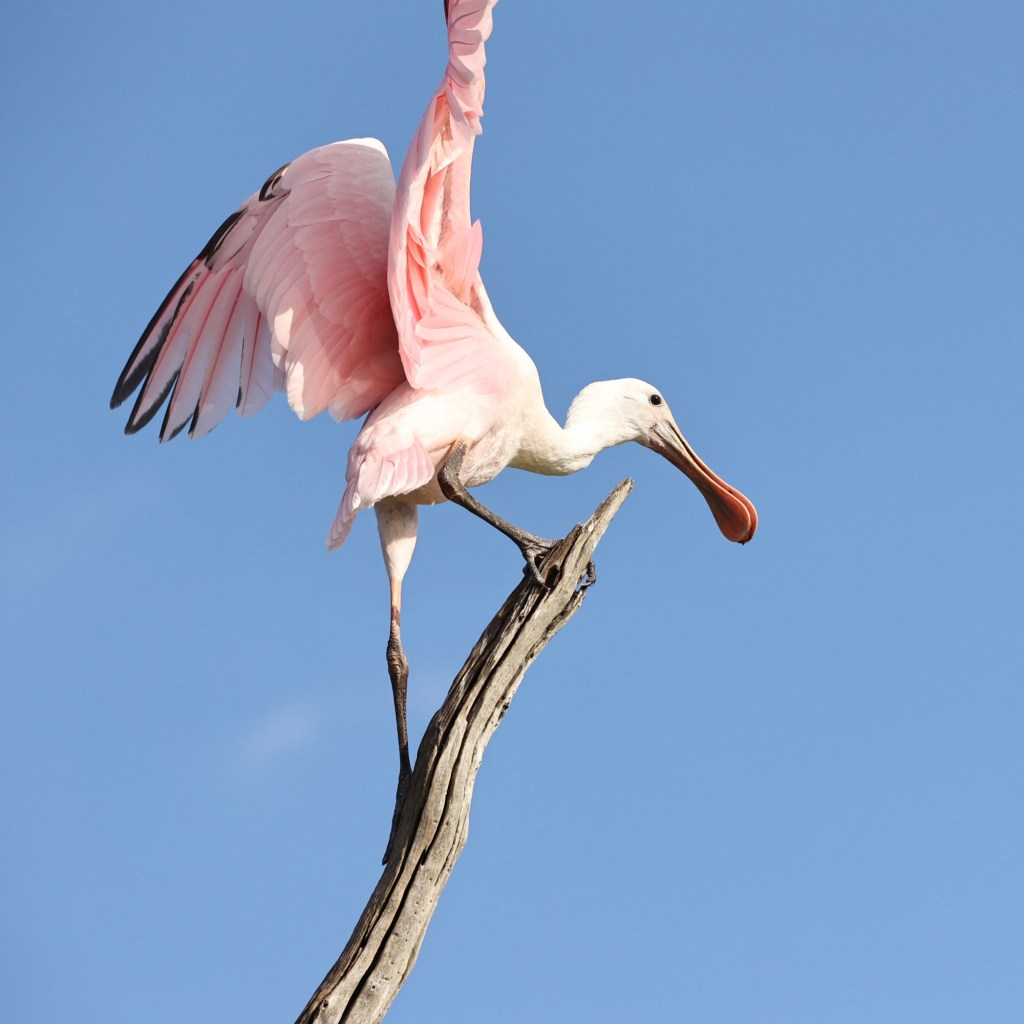
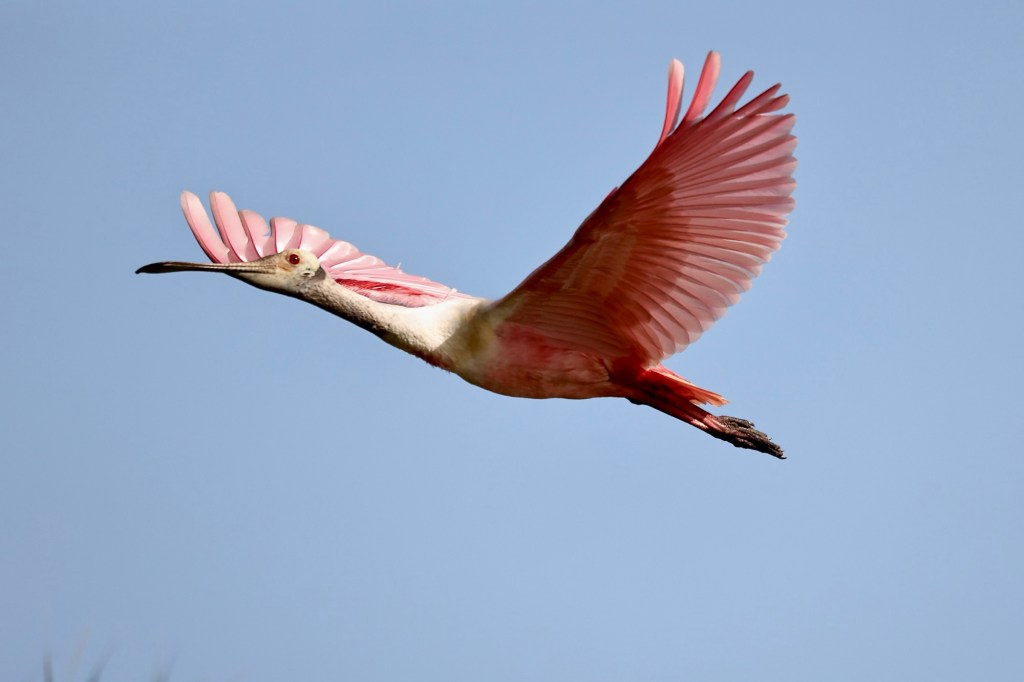
Getting ready for take-off . . .
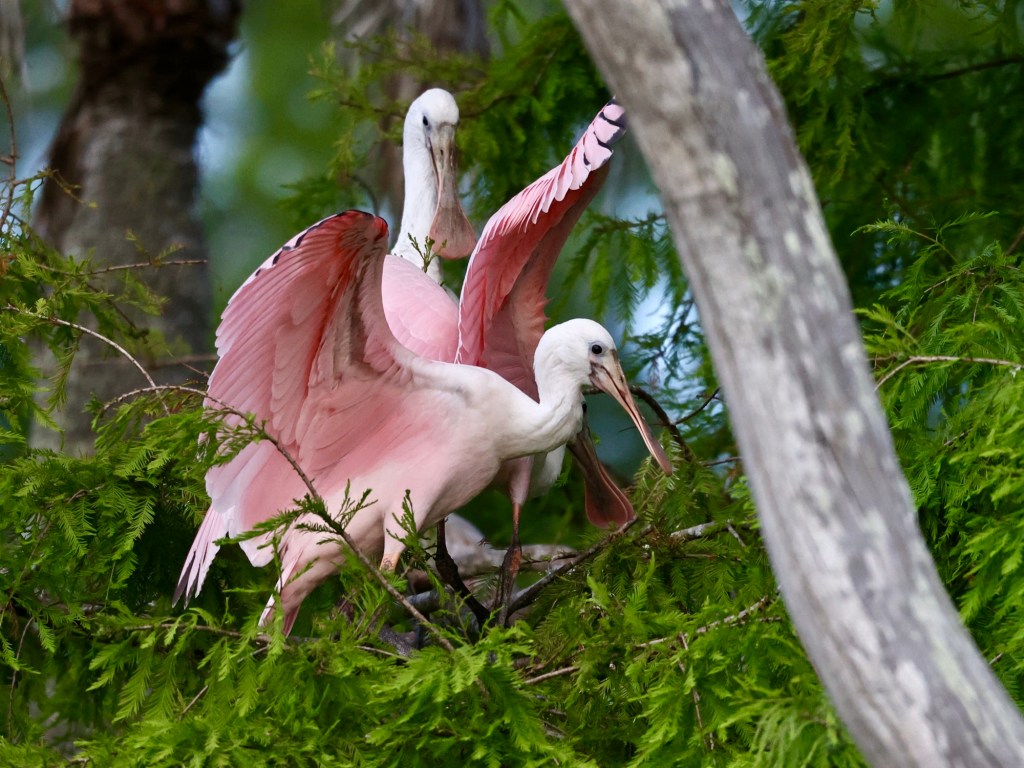
Sometimes they manage to land more gracefully than others! 😉
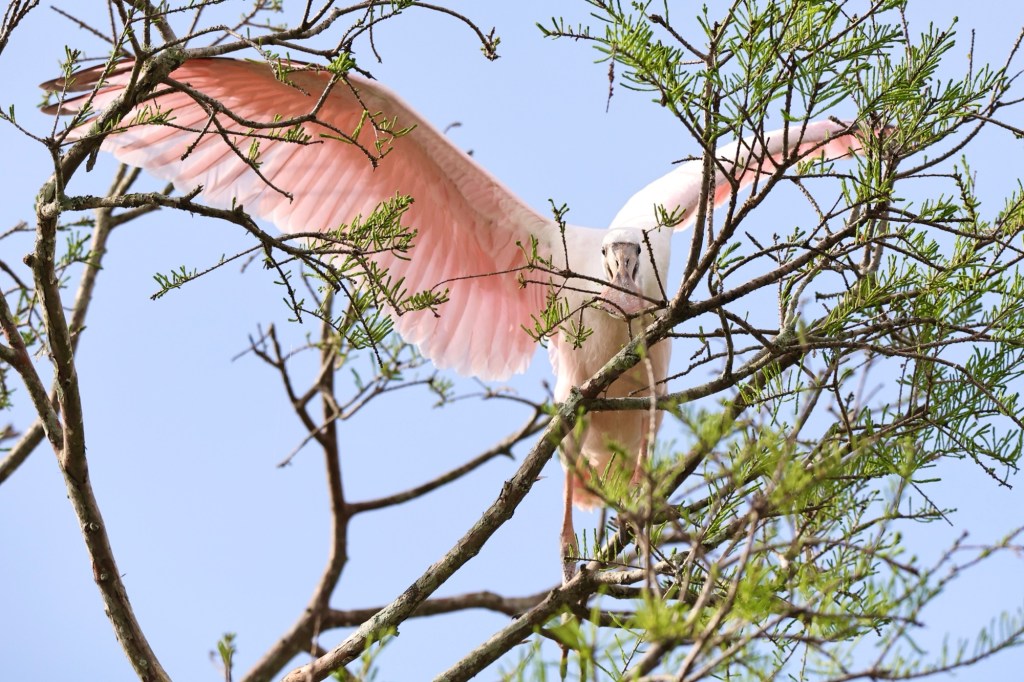


How incredible to witness that beauty in person!
LikeLiked by 1 person
Oh, yes, Susan, it was a real pink spectacle, especially to see so many young fledglings together with their parents. 💕
LikeLike
Fantastic images. 😉
LikeLiked by 1 person
Thanks so much! Fantastic birds! ☺️
LikeLiked by 1 person
Their lack of ballet skills are more than made up by their pink beauty. Soon these fledglings will be water dancing with the adults!
LikeLiked by 1 person
So well said! It’s a lot of fun watching them practice how to get it right! ☺️
LikeLiked by 1 person
Great photos! I just love these birds!
LikeLiked by 1 person
Me too, Sue! Thanks so much for your visit and I’m glad you enjoyed them.
LikeLike
Such striking birds, very nicely captured 😊
LikeLiked by 1 person
Much appreciated, Belinda! Yes, they are so striking, both in the color of their plumage and their shape and form. 🩷
LikeLiked by 1 person
You have such beautiful Spoonies over there BJ. Hoe cute watching parent birds model their essential behaviour, as we do as parents and grandparents and as our parents did for us. Many have grown up believing that birds get all their wisdom instinctively but we know now from ornithology and our own observations and studies in behaviour that most is learnt from attentive observation.
LikeLiked by 1 person
Thanks so much for your thoughtful comments, AB. Yes, and we get such great joy out of watching all this take place as they begin to leave the nest.
LikeLiked by 1 person
Now you’ve got me wondering why we don’t call the bird more naturally a rosy spoonbill instead of using the hoity-toity Latin-derived adjective roseate.
LikeLiked by 1 person
Not exactly an answer to your specific question but……According to Birds of the World, the species was “originally described by Linnaeus in 1758 as Platalea Ajaia,” from the indigenous Tupi language of Brazil. “Much of our general knowledge of the Roseate Spoonbill still comes from R. P. Allen’s monograph (Allen 1942)”, who later used the nickname Flame Bird (1947).
LikeLiked by 1 person
These birds are both unusually beautiful, and beautifully unusual! Nice captures!
LikeLiked by 1 person
Thanks so much, Kathy. Well said!
LikeLike
“…a real pink spectacle…” 😄
Nice job catching spectacular birds!
LikeLiked by 1 person
Thank you for your kind words, Amy! Yes… They are truly spectacular birds, especially when there are so many together!
LikeLike
How beautiful they are and how lucky you are to see both the adults and fledglings! The images are wonderful.
LikeLiked by 1 person
I really appreciate your visit and your kind comments, Deborah! I felt very fortunate to see them together at this time of year.
LikeLiked by 1 person
Wonderful photos, the Spoonbills are so elegant and I love how you captured the adults guiding their fledglings.
LikeLiked by 1 person
How very kind, Anita. I was so fortunate to return to this very spot just after the young spoonbills started fledging.
LikeLiked by 1 person
Wow! Just love the pink feathers of this bird! And its spoonbill is amazing to me… you took some fantastic photos!
LikeLiked by 1 person
Thank you! The roseate spoonbills really are unique and beautiful birds!
LikeLiked by 1 person
This is a lovely set of photos! How wonderful that you have the opportunity to view and document their lifecycle. Thank you for sharing it.
LikeLiked by 2 people
Thank you for visiting and for your thoughtful comments! We are so fortunate to have the spoonbills nesting in one of our favorite birding places.
LikeLike